Restore vs. Replace: The Smarter Strategy for Facilities
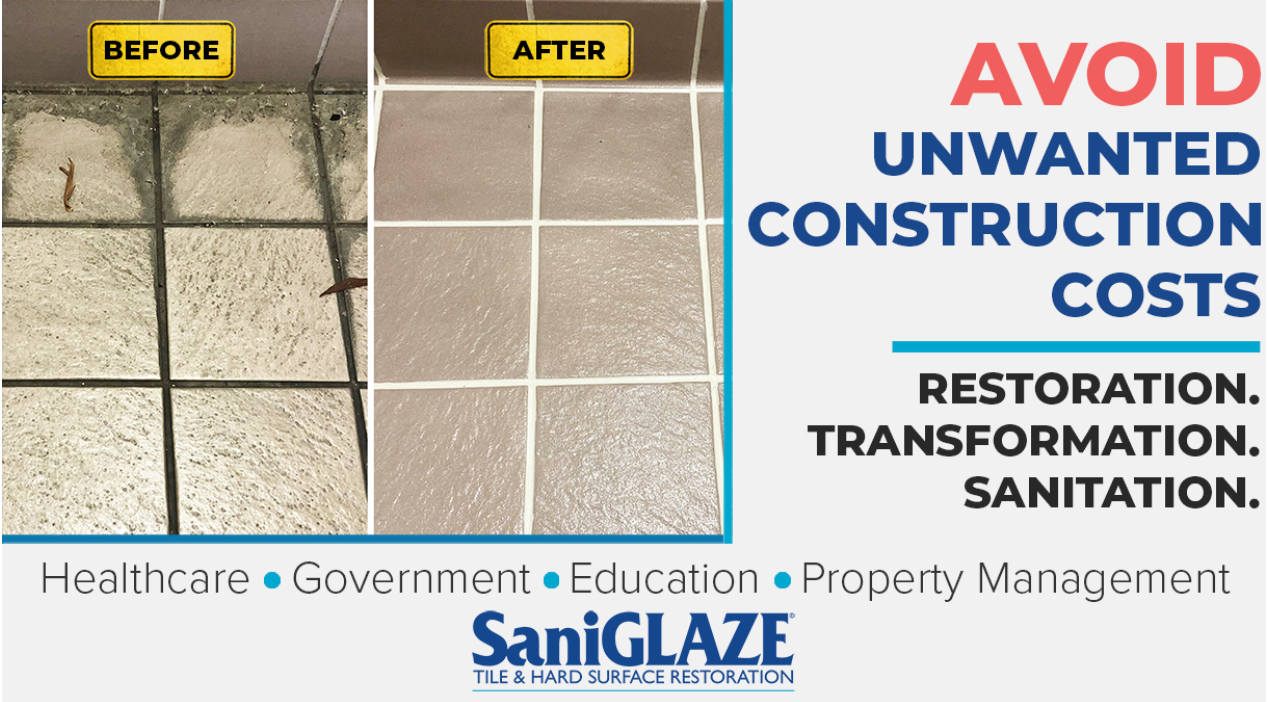
When tile and grout start to show their age, stains in the grout lines, dull tile surfaces, or persistent odors, many facility managers assume the only solution is replacement. But tearing out and reinstalling flooring is often the most disruptive and expensive option. In many cases, restoration can deliver the same visual and functional results at a fraction of the cost and time.
At Sterling Services, we frequently work with facility managers who initially planned full replacements. After evaluating their surfaces, they discover something surprising: their existing tile and grout are structurally sound and they simply need restoration.
The True Cost of Replacement
Replacing tile and grout is rarely just about the materials. The process typically involves demolition, noise, dust, and extended downtime for the facility. For businesses operating daily—offices, schools, hospitals, or hospitality environments—this disruption can affect operations, employees, and customers.
The rip-out and tear-out process can be messy, noisy, and time-consuming, often forcing spaces to close temporarily while construction takes place.
A Smarter Alternative: Surface Restoration
Instead of removing existing materials, restoration focuses on renewing and protecting what is already there. Advanced restoration systems clean deeply, remove embedded contaminants, and apply protective coatings that restore appearance and performance.
Through the SaniGLAZE® restoration process offered by Sterling Services, tile and grout surfaces can be cleaned, repaired, and sealed with durable coatings that make them look like new while also protecting them from moisture, bacteria, and future staining.
The result is a refreshed surface that is easier to maintain and more resistant to wear over time.
Minimal Downtime, Maximum Impact
One of the biggest advantages of restoration is speed. Many restoration projects can be completed overnight or in carefully scheduled phases, allowing facilities to continue operating with little to no disruption.
For high-traffic environments such as healthcare facilities, schools, office buildings, or food service spaces, this means renovations can happen without shutting down essential areas.
Extending the Life of Your Surfaces
Tile and grout surfaces are often replaced prematurely due to appearance or sanitation issues even though the materials themselves may last decades. Restoration allows organizations to extend the life of existing surfaces while maintaining a clean, professional appearance.
In addition to improving aesthetics, protective coatings can also help:
- Seal porous grout to prevent moisture and odor buildup
- Reduce the accumulation of bacteria and contaminants
- Simplify routine cleaning and maintenance
- Preserve the original investment in the facility
A Better Approach to Facility Management
Smart facility management isn’t always about replacing what’s old, it’s about maximizing the value of what already exists. Restoration solutions help organizations reduce capital expenditures, avoid operational disruptions, and maintain environments that look clean, professional, and well cared for.
Before planning your next renovation project, it may be worth asking a simple question:
Does this surface really need to be replaced—or can it be restored?
At Sterling Services, our team works with facility managers across industries to evaluate surfaces and recommend the most efficient path forward. Often, the smartest investment isn’t replacement—it’s restoration.